Tuesday, February 11, 2025

First Group Meeting

The first group meeting brought together people from different groups to share ideas, help each other improve our film openings, or even suggest new ones. This helped us develop our stories and get useful feedback. Some ideas they suggested for my film opening were:
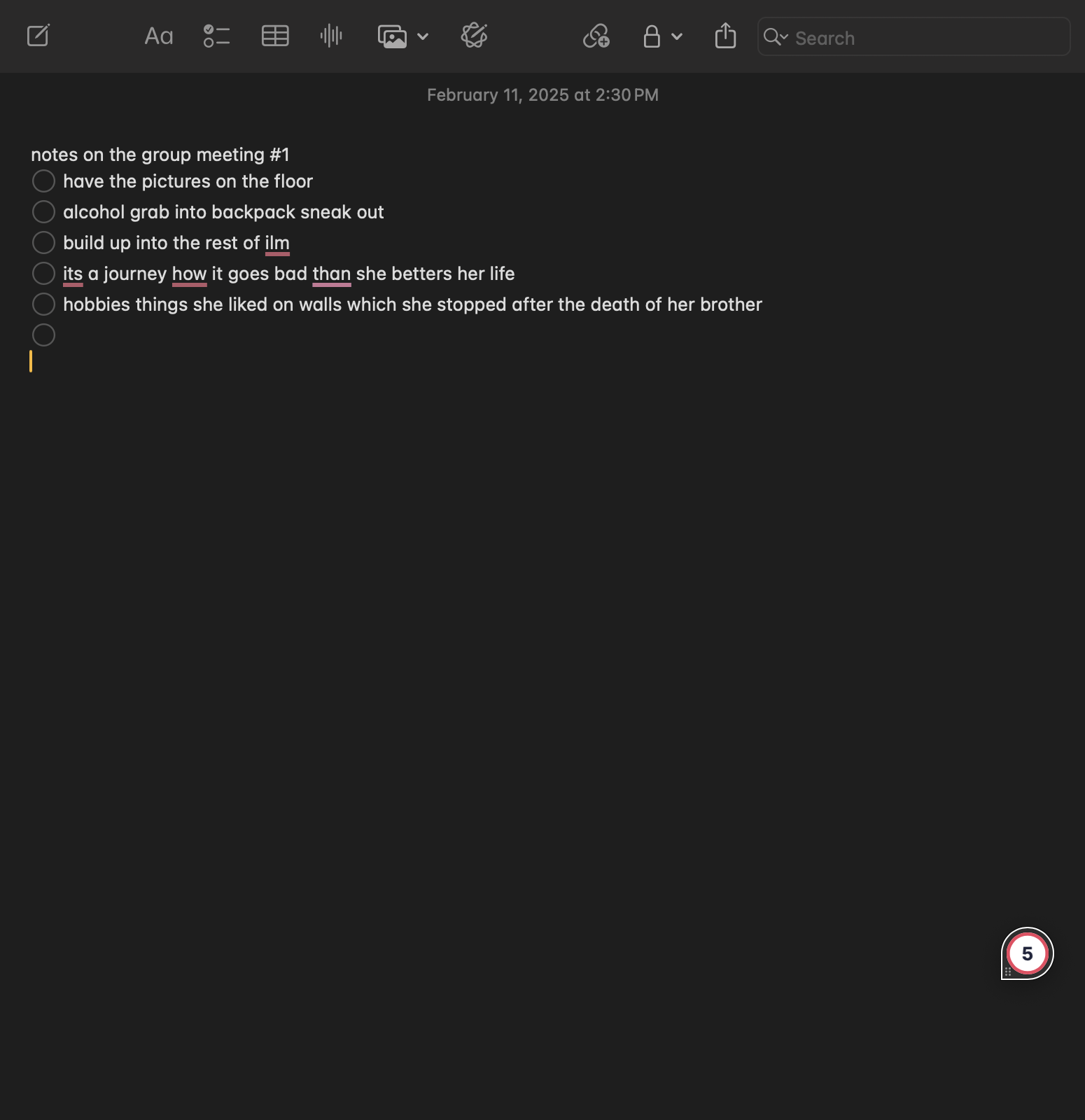


To open the film with pictures scattered on the floor. This will create a sense of loss or chaos. The visuals will help show the main character’s emotions and hint at her past.

To get the protagonist grab the alcohol she has in her room and put it into a bag and sneak out with it. This will help show the bad things she is doing to get over the death of her younger brother.

The story should show how it will build up into the rest of the film. Even though its is only the opening, hinting at how the protagonist’s journey will develop, starting in a dark place but showing the change for a better life.

They shared the idea of hobbies and interests she gave up after her brother’s death. This could be shown with old drawings, sports gear and trophies, or instruments on her walls, untouched. This will show the grief and lost identity, the character is going through.

Now with all of these ideas i need to get with my partner and share with her these ideas and she can share hers with me and we can pick and combine ideas together for our film. While I am not sure if these ideas fit our vision, they helped me think about different ways to tell the story.


Sunday, February 9, 2025

Music Research For My Film Opening

A film's tone is greatly influenced by its soundtrack. I need music that complements the sadness, tension, and escape moments when the girl sneaks out for my story about her coping with her brother's death. I want music that reflects the tension from her parents' conflicts, her anguish over losing her brother, and her sense of liberation when she escapes all the chaos. 

I'm searching for instrumental music that enhances the narrative without drowning out the conversation. I like a slow tempo that captures the scene's tension and grief while combining raw and calm sounds that show the protagonist's inner suffering and her sense of freedom as she escapes away.

Examples of Music That Might Fit

• Lorde – "Liability" (Instrumental): This track’s emotional tone mirrors the protagonist's grief and sadness.


• Max Richter – "On The Nature of Daylight": This piece builds gradually and has a sorrowful, emotional quality that would suit the story's mood.


• Ólafur Arnalds – "Saman": A gentle mix of piano and electronic sounds that creates a calm yet intense atmosphere.


• Ludovico Einaudi – "Experience": This piano composition unfolds over time, perfectly embodying the protagonist’s journey through pain and escape.


Next Steps

I'll start listening to songs by new artists or think about some well-known songs that fit now that I know more about the kind of music I want. I want to make sure the music complements the dramatic parts because it has a big influence on how the viewer feels about the narrative.

Friday, February 7, 2025

Timeline

To stay on track, I’ve assigned specific tasks to each week leading up to the final submission.

Week 1 (1/27 - 2/2)

  • Research film openings and movie plot examples.
  • Start developing my movie plot.
  • Think about possible filming locations.
  • Consider potential actors.

Week 2 (2/3 - 2/9)

  • Finalize the script.
  • Complete the storyboard.
  • Decide on and secure filming locations.
  • Confirm cast and set filming dates.
  • If possible, begin filming.

Week 3 (2/10 - 2/16)

  • Continue filming.
  • Record voiceovers (if needed).
  • Start recording foley (if needed).

Week 4 (2/17 - 2/23)

  • Assemble the first rough cut of the film.
  • Incorporate any necessary foley or voiceovers.

Week 5 (2/24 - 3/1)

  • Review and analyze the first cut.
  • Re-edit if necessary, exploring alternative approaches.

Week 6 (3/2 - 3/8)

  • Finalize edits and revisions.
  • Research and write the Critical Creative Reflection (CCR).
  • Edit and review the CCR.

Week 7 (3/9 - 3/16) - Buffer Week

  • Use this week for any last-minute adjustments or unexpected delays.


Wednesday, February 5, 2025

Opening Credit Sequences in Coming-of-Age Films

Opening credits establish the setting and the mood for a film. In coming-of-age movies, they show the main characters's emotions, the theme of the film, and the overall tone. Three films I used for the research of the opening credit sequences:

1. Eighth Grade (2018)

  • The credits use a plain, modern font that feels minimalistic and casual, matching the awkward and realistic feel of the movie.
  • The text appears in small, subtle letters at the bottom corner of the screen, not drawing too much attention away from the scenes.
  • No flashy effects—just simple fades that keep the focus on the character’s experience.
  • The director’s name and production credits appear early, followed by the main cast.
  • The simple credits make the film feel more authentic, like we’re watching real life unfold rather than a polished Hollywood story.
 

2. Booksmart (2019)

  • The font is bold and fun, with bright colors that contrast against the background. It show the film’s high-energy, modern feel.
  • The credits are separated throughout the opening, appearing at different moments in a playful and natural way.
  • The text sometimes moves slightly or appears with a quick pop, keeping up with the film’s fast-paced and comedic style.
  • The lead actors’ names show up first, followed by the creative team.
  • The colorful and dynamic credits make it clear that this film will be upbeat and full of personality.


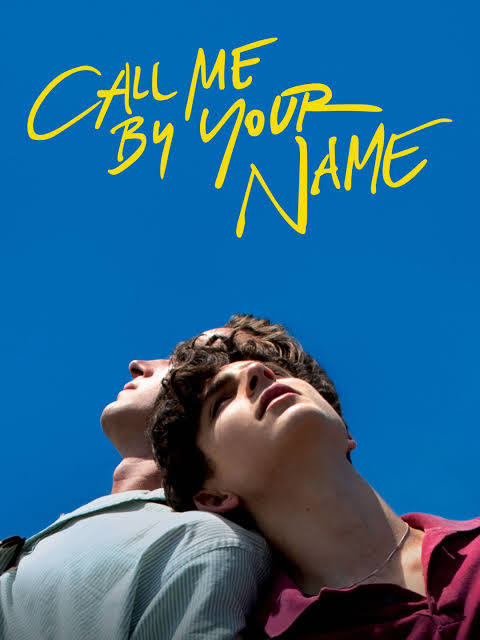
3. Call Me by Your Name (2017)

  • The film uses a handwritten-style script font, adding an artistic and nostalgic touch.
  • The credits are centered on the screen but do not distract from the beautiful visuals of the Italian countryside.
  • The text gently fades in and out, making it feel smooth and timeless.
  • The film title is introduced first, followed by the cast and crew in a traditional order.
  • The elegant and slow-moving credits set a dreamy, romantic tone that fits the film’s story of love and self-discovery.


Final Thoughts

All of these films use different credit sequences to match their themes. Eighth Grade is simple and realistic, Booksmart is bright and playful, and Call Me by Your Name has a more elegant, nostalgic approach.

For my own project, I need to decide whether I want my credits to be subtle and understated or bold and eye-catching. The tone of the story will help determine what fits best.

Monday, February 3, 2025

Film Openings Analysis

Film openings set the tone for the story, introduce key characters, and establish themes. In the coming-of-age genre, openings often focus on the main character's world and hint at the personal growth they will experience. I researched these next films based on their openings.

Clueless (1995): The film opens with a montage of Cher's luxurious Beverly Hills lifestyle set to the song Kids in America. Her voiceover presents her personality, high school viewpoint, and privilege. In addition to hinting at Cher's future character development, the film's funny, lighthearted tone is immediately established by its vibrant colors, quick editing, and lively soundtrack.


The Perks of Being a Wallflower (2012) Charlie narrates his thoughts while writing a letter in the opening. The tone, which is serious and reflective, establishes his loneliness and presents the story's main themes of connection and acknowledgment


Lady Bird (2017): The film opens with Lady Bird and her mother listening to an audiobook of The Grapes of Wrath in their car. Lady Bird suddenly loses her temper and throws herself out of the moving car following an intense argument. The humor, drama, and main theme of the movie—her fight for independence—are all captured in this scene.

Sunday, February 2, 2025

Choosing a Genre for My Project

For my portfolio project, I’m deciding between two genres: coming-of-age and mystery. Here’s what I’ve learned about each one.

Coming-of-Age

This genre centers on a young character's development or a significant life lesson. Usually, the plot revolves around friendships, change, or personal struggles.

My project might be about a character going through a significant transition, such as changing schools, navigating friendships, or making a significant decision, if I choose this genre. To convey feelings, I would use close-ups and warm tones.


Mystery

Mystery films focus on finding the truth, solving a mystery, or revealing secrets. They typically contain shocks, suspense, and hints.

If I decide on this genre, my project might have a character attempting to solve a minor puzzle, uncovering a secret message, or learning something surprising. To create tension, I would employ close-ups and darker lighting.

There is good storytelling potential in both genres. Whereas mystery is about solving a problem and keeping the audience guessing, coming-of-age is more about characters and feelings. I'll choose the best possible option for my project shortly. 


Watch the site for updates!

Saturday, February 1, 2025

Starting My Cambridge Portfolio Project

As we begin the Cambridge Portfolio Project, I’m thinking about ideas and how I want to approach it. This project will take planning, creativity, and a good understanding of film to make a strong final piece.

Right now, I’m deciding on my story and what genre will work best. I want my project to be interesting but also realistic with the resources I have. I’m choosing between coming-of-age and mystery, two genres that tell very different types of stories.

Next, I’ll focus on planning my idea, researching genre rules, and thinking about locations, props, and how I’ll film. In my next post, I’ll go over both genres and how they could shape my project.


Critical Reflection

The music video succeeds in portraying the emotional situation of heartbreak, introspection and self-development especially through the eyes...